
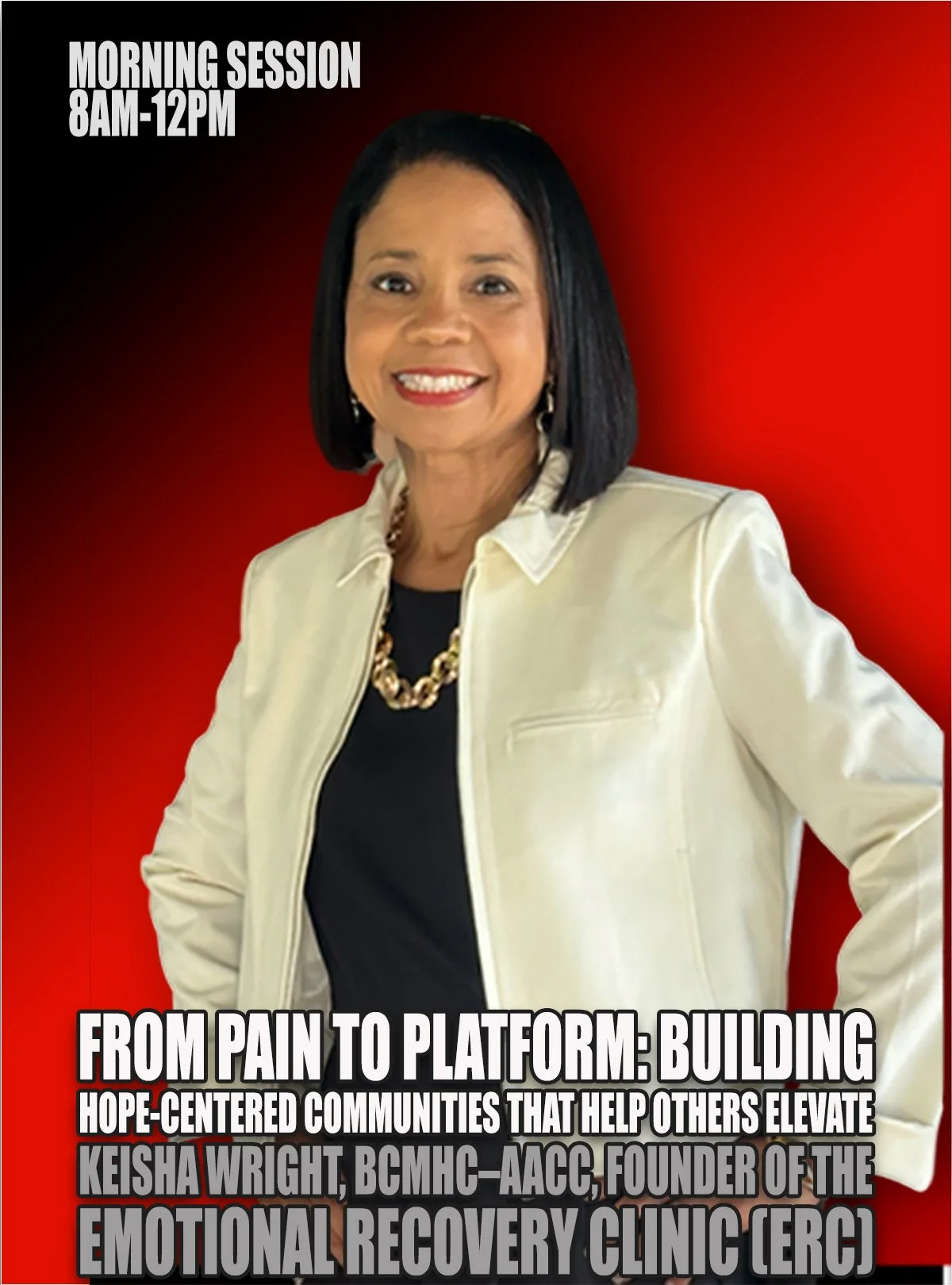
From Pain to Platform: Building HOPE-Centered Communities That Helps Other People Elevate
Have you ever wondered how personal pain can be transformed into a powerful platform for healing others—without burnout, shame, or silencing your story? This 4-hour pre-conference intensive, led by Keisha Wright, BCMHC–AACC, Founder and Executive Director of the Emotional Recovery Clinic (ERC), is designed for leaders, coaches, counselors, pastors, and community advocates who are ready to move beyond surface-level support and into trauma-informed, hope-filled transformation.
Drawing from over 14 years of frontline trauma recovery work and her own lived experience, Keisha will guide participants through the process of reframing trauma not as a life sentence—but as an injury that can be healed. This session introduces the HOPE Framework (Helping Other People Elevate), a peer-informed, faith-integrated model that equips individuals and organizations to walk alongside people in their healing journeys with clarity, compassion, and sustainability.
Participants will explore how the Emotional Recovery Clinic functions as a trauma-specific healing environment—meeting people where they are emotionally, spiritually, and relationally—while building pathways from survival to wellness and from healing to leadership. This session moves beyond inspiration into practical application, offering real-world tools for translating pain into purpose, testimony into training, and calling into community impact.
Attendees will gain actionable strategies to:
• Build trauma-aware, emotionally safe environments within churches, nonprofits, clinics, and community organizations
• Reduce emotional and spiritual stigma surrounding trauma, addiction, toxic relationships, and mental health
• Create continuity of care between crisis, recovery, and long-term restoration
• Develop peer-led mentorship models that elevate rather than rescue
• Integrate faith without spiritual bypassing—honoring both biblical truth and emotional reality
Topics covered include affective awareness, trauma triggers and nervous system regulation, relational repair, marriage regeneration, leadership burnout prevention, and how to mobilize healed individuals into HOPE Mentors who serve from wholeness rather than wounds. Participants will also examine how ERC clinics and HOPE intensives create transformational spaces where emotional truth meets spiritual truth—allowing lasting change to take root.
Special emphasis will be placed on “From My Pain to My Platform”—helping attendees discern the difference between sharing from an open wound versus a healed scar, and how to steward their story in a way that brings freedom to others without re-traumatizing themselves. Keisha will also unpack how HOPE helps individuals elevate others through wisdom, boundaries, and purpose-driven leadership.
The Emotional Recovery Clinic and HOPE Initiative exist to remind people that healing is possible, purpose is attainable, and pain does not disqualify you—it prepares you. This session invites participants into a growing movement of emotionally healthy, spiritually grounded leaders who are committed to helping other people elevate—so families are restored, communities are strengthened, and hope becomes contagious.
Because when healing is real, elevation is inevitable—and change becomes visible.
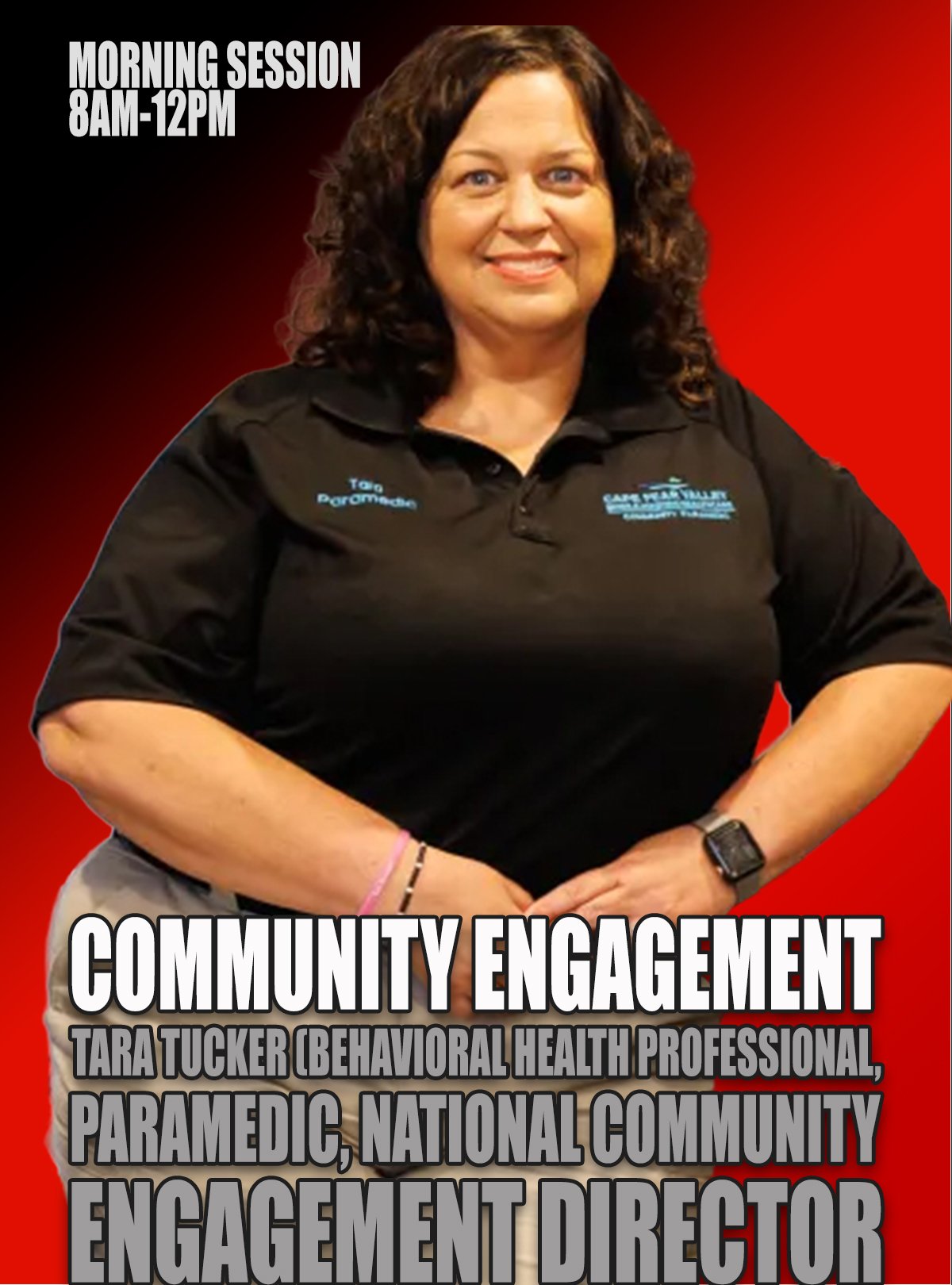
COMMUNITY ENGAGEMENT
Have you been wondering how to leverage your community to create deeper connection, expand impact, and build sustainable relationships with peer-based organizations such as Broken Chains JC?
This 4 hour pre-conference session, led by Tara Tucker, Behavioral Health Professional, Paramedic, and National Community Engagement Director, is designed for leaders, agencies, partners, and Broken Chains members who want to move beyond one-time events and into meaningful, trust-based, long-term community partnerships. Participants will explore how Broken Chains JC functions as a growing Recovery Support Organization—walking alongside individuals in their recovery journeys through authentic, peer-based support rooted in lived experience.
Attendees will gain practical, real-world strategies for leveraging agencies, strengthening cross-sector collaboration, and building effective bridges through Broken Chains JC. This session equips participants with actionable tools to reduce silos, mobilize shared resources, and translate relationships into coordinated action that supports individuals at critical transition points. The discussion will also address approaches to reducing stigma and barriers to care, partnering effectively with community agencies, service providers, and first responders, and engaging in compassion-driven outreach that intentionally goes where traditional systems may not.
Topics covered include working with post-overdose response teams; connecting individuals to treatment and recovery resources; and ensuring continuity of care following release from hospitals, treatment facilities, and justice centers. Participants will examine harm reduction practices that reduce immediate risk, prevent fatal overdoses, and build trust—while consistently pointing toward healing and restoration. Additional focus areas include “Funcovery” sober activities that strengthen recovery and community bonds, mentorship and advocacy for justice-involved individuals, and suicide prevention through compassionate, peer-led intervention and connection to supportive resources.
Broken Chains JC meets people where they are—CHANGE IS POSSIBLE.
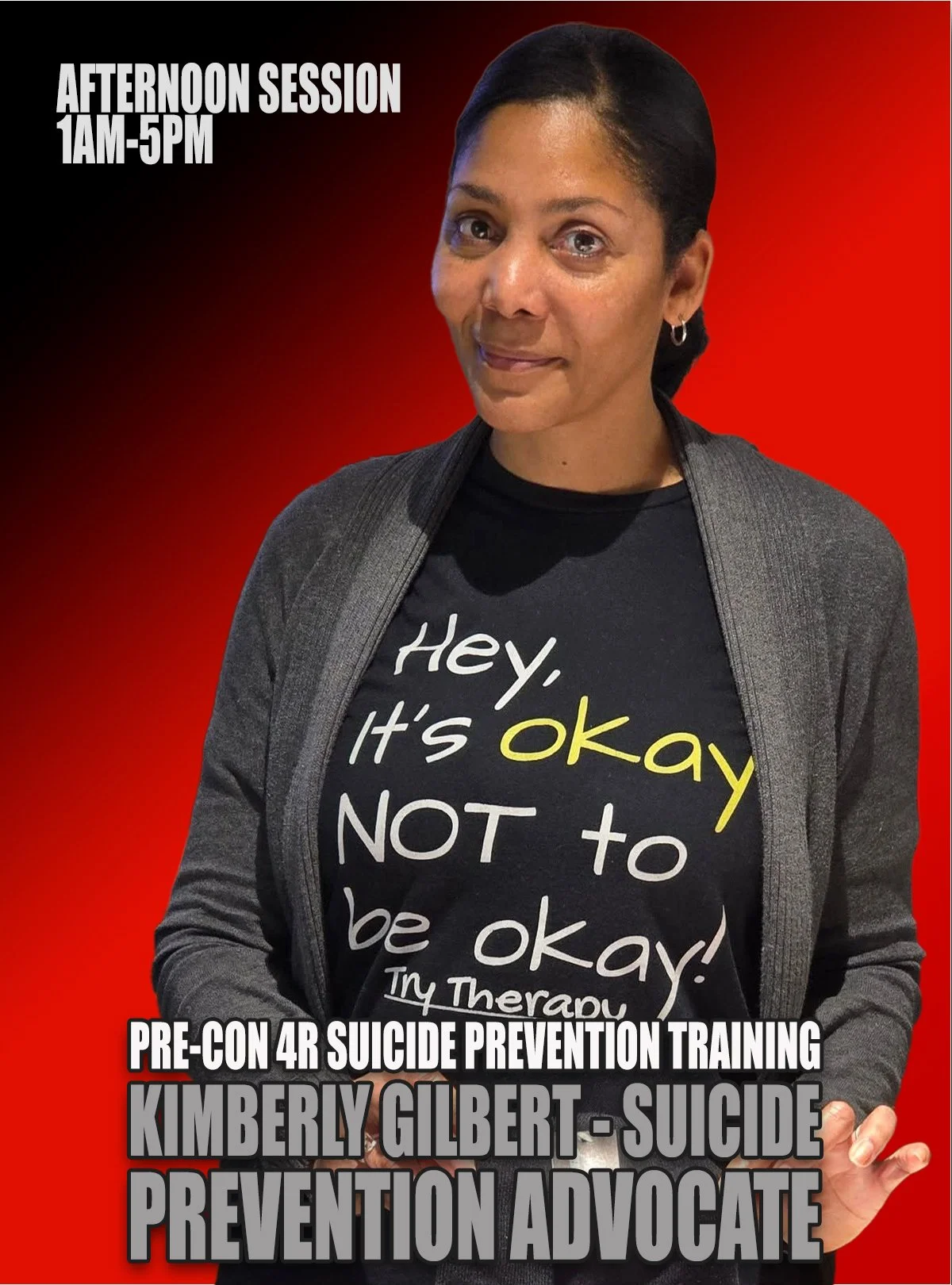
Pre-CON 4R Suicide Prevention Training
Suicide claims one life in the United States every 11 minutes—yet many people still feel unprepared to recognize the warning signs or take action when it matters most.
In this breakout session, suicide prevention advocate Kimberly Gilbert delivers a powerful, practical training built around the 4R Suicide Prevention Framework:
Red Flags – How to recognize emotional, behavioral, and verbal warning signs
Response Actions – What to say, what not to say, and how to respond in real time
Resources – Where to connect people to immediate and ongoing help
Reinforcements – How to provide continued support and reduce long-term risk
This session is designed to pack in maximum value—clear information, real-world tools, and actionable tips participants can apply in families, workplaces, faith communities, and everyday life.
Every attendee will receive a suicide prevention pocket card with quick-reference tips to carry with them—because prevention doesn’t end when the session does.
Attend this pre-conference session to gain confidence, clarity, and courage to help save lives.